What equipment and accessories do I need to breastfeed my baby?
Walking past a whole wall of feeding products in the baby store can feel overwhelming, especially when you aren’t yet sure what you will actually use. Luckily, breastfeeding needs very little equipment, and much of what you see on that wall is optional.

Below I have listed the basic essentials, followed by some optional items that many Mums find helpful.
The Essentials:
Nursing bras
Many department stores now have a great range of maternity bras you can fit yourself, or you can be fitted later in pregnancy. Try to choose a soft, non-underwire style for the early weeks, as underwire can press on breast tissue and may contribute to blocked ducts. Practise opening and closing them with one hand, as you will be holding your baby in the other. Most women’s breasts enlarge significantly when the milk comes in on day 3–5 after the birth, then settle over the next week or so. So it is worthwhile buying just two before the birth and waiting a few weeks to decide which size and style to buy more of.
Breast pads
These are disposable or washable pads (cotton or bamboo) worn inside your bra to catch any milk leakage. The most important thing is that they are comfortable and don’t show through your clothing. Personally, i preferred disposable pads as they were more absorbent, and I leaked quite a lot during and between feeds. Perhaps start with one pack and try them before buying more. Some women wear them the whole time they are breastfeeding for leaks or simply to stop nipples showing through.

Optional But Helpful:
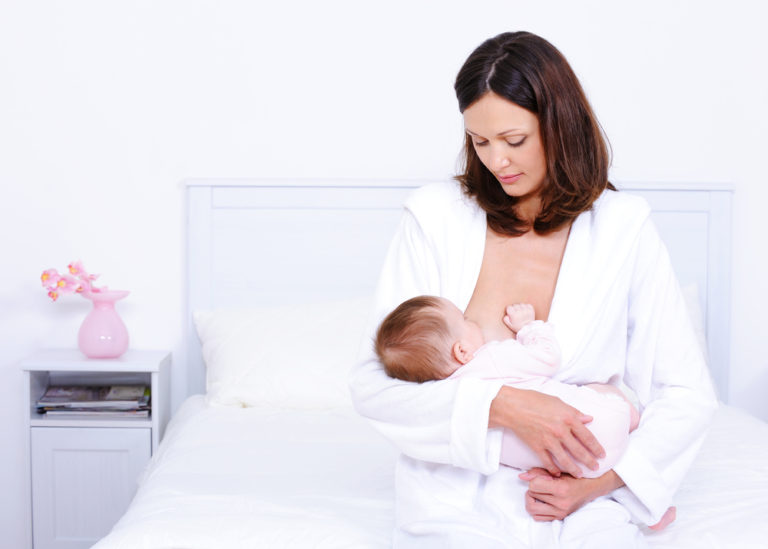
Breastfeeding Pillow
This can be a normal rectangular pillow, a simple triangle shaped pillow or a specific breastfeeding pillow (there are many brands available). Lifting your baby up to a comfortable height can help with attachment as well as your own posture and comfort.
Nipple cream
Many Mums find this soothing for tender nipples in the early weeks. Purified lanolin-based creams are the most common, are safe for your baby and don’t need to be washed off before feeds. Rubbing a little expressed breast milk onto the nipple after a feed and letting it air dry works well too, and it costs nothing. If your nipples are cracked or very painful, try to see your midwife, maternal and child health nurse or a lactation consultant, as this is often a sign the attachment needs a little adjusting.
Hydrogel breast discs
These are helpful for damaged nipples. They create a good environment for healing as well as comfort between feeds.
Breast pump
Not every Mum will need to express, and some prefer to hand express. However, a pump can give you some freedom and is useful if you are returning to wok.
- A manual pump is fine for occasional use.
- An electric pump is best if you will be expressing often.
- Hospital grade pumps can be hired from many pharmacies or the Australian breastfeeding Association (ABA), which is especially helpful if your baby is in the special care nursery.
- A silicone milk collector can catch let-down milk from the other breast while you feed.
Be aware that many pumps only connect to bottles of the same brand.

Bottles
If you plan to give expressed breast milk, you will need a bottle and newborn teat. Wide-neck bottles with flatter teats are popular, but none truly mimic a nipple, so a standard teat is fine for most babies. A standard-size bottle will fit a wider range of teats and pumps. Most bottles sold in Australia are now BPA (Bisphenol A) free, but it is still worth checking the packaging.
Steriliser
Bottles and pump parts need to be sterilised, and a large saucepan of boiling water does the job well. If you would like a steriliser, electric models stay on the bench and take up more space. Microwave sterilisers are quicker and store easily in a cupboard. Whichever you choose, follow the directions so your equipment is properly sterilised.

Remember:
You don’t need everything to start with, and you can always add items as you go. Ask friends and family what they found most useful, and be guided by what suits you and your baby.
The most valuable breastfeeding support isn’t something you buy. If you are finding feeding hard, help is available from:
- your midwife or maternity service/hospital.
- your maternal and child health nurse.
- a lactation consultant.
- the National Breastfeeding Helpline on 1800 686 268.
To make shopping easier, download my free Enjoy Your Baby Bundle, it includes a printable equipment checklist to take with you to the shops.
Most importantly, how you set up for feeding is your choice. You know yourself and your baby best.
My book ‘Survive and Enjoy Your Baby, How To Find Your Path to Parenthood’ has all the information you need for your baby’s first year of life including a chapter devoted to breastfeeding. The book is available in all good book stores or from my online shop.