Secondhand baby goods and product tips
Second-hand products are a great place to start, good for the budget and the environment.
Preparing for a new baby often comes with a long list of equipment, and it can be quite a shock when you add up the cost of everything on it. Buying second-hand is a wonderful place to start. It is kind to your budget, kind to the planet, and many baby items are only used for a few short months before they are outgrown and ready to be passed on.
Most second-hand baby goods are perfectly safe to use. A few items, particularly the ones that protect your baby while they sleep or travel in the car, need a little more checking before you bring them home. After more than 20 years as a midwife and maternal and child health nurse, and as a Mum of 4, these are the checks I would want every family to know, so you can shop second-hand with confidence.
Why buying second-hand is a smart and responsible choice:
Babies grow remarkably quickly, especially in the first year, so many baby clothes and products are barely used before they no longer fit. A bassinet might only be needed for a few months, and a newborn onesie for a few weeks. That means there is a lot of good quality equipment out there looking for a second family.
We know that Australians buy around 56 new items of clothing per person each year, and more than 200,000 tonnes of clothing ends up in landfill annually. Every onesie, pram or cot that finds a new home is one less item going into landfill as well as one less item needing to be made!
I never think of second-hand as second best for your baby. Choosing pre-loved items is a thoughtful decision. It frees up money for the things that matter most in those early months, and it is a lovely way to re-use what is already available in our community.
General checks for any second-hand baby items:
Whether you are buying from a friend, an op shop or an online marketplace, a few simple checks will help you feel sure about what you are bringing home.
- Inspect it well, Pick it up, look at it from every angle and test any moving parts, folds, locks and brakes.
- Ask for more photos if buying online. Request pictures from different angles and ask how old it is, where is has been stored and whether there is any damage.
- Check for recalls before you pay. Recalled products can still end up for sale second-hand because the seller may not know. Yu can search for free at
- Look for safety label. Many baby products have permanent safety warnings and a date of manufacture on them. A missing label makes it harder to know if the item meets Australian Standards.
- Make sure all the parts are there. Harnesses, screws, brakes, locks and mattress supports are easy to lose in a move.
- Try to get the instructions. These often hold important safety information about assembly and use. If the seller doesn’t have them, many are available on the manufacturers website.
It is also worthwhile knowing your consumer rights. When you buy second-hand from a business, the consumer guarantees still apply, which means the product should be safe, durable and free from defects. in a private sale between 2 people, most of the guarantees don’t apply, so checking carefully before you buy is your best protection. keep a copy of any listing, any message and your proof of purchase just in case.
Cots: what to check before your baby sleeps in one:
Your baby will spend many hours in their cot, so it is the one item where a few extra minutes of checking is well worth it. Red Nose recommends that the safest place for your baby to sleep is in a safe cot, on a safe mattress, with safe bedding, in your room for the first 6 months.
When looking at a second-hand cot try to check that:
- It has a permanent safety warning label showing it meets the mandatory Australian standard. Red Nose advises that second-hand cots under about 10 years old, with safety standards tag still attached, should still meet the standard.
- It hasn’t been recalled. The ACCC household cots guide is a helpful place to check and lists recent cot recalls.
- Is it sturdy and complete, with no loose screws, cracks, splinters, sharp edges or parts sticking out that could catch on your baby’s clothing.
- Any drop side locks securely in place.
- It hasn’t been modified or repaired in a way that could affect its safety features.
The mandatory standards for infant sleep products were updated in January 2026, so if you are unsure about an older cot, the ACCC guide above is a good place to look before you buy.
Antique and heirloom cots can be beautiful pieces of furniture and often carry lovely family memories. Older cots may not meet current safety standards though, as they can have gaps that trap a baby’s head or limbs, and some were painted with lead-based paint. An heirloom cot can still have a special place in a nursery as a home for teddies or a display piece, while your baby sleeps in a cot that meets today’s standard.
Second-hand mattresses:
This is one of the questions I am asked often. red Nose advises that there is no evidence of an increased risk of SIDS (Sudden Infant Death Syndrome) for babies who sleep on second-hand mattress as long as the mattress is:
- Firm, flat and clean, an in good condition
- The right size and thickness for the cot, fitting snugly with a gap of no more than 20mm around the sides and ends (if you can fit more than 2 fingers int he gap, it is too big)
- Stored somewhere dry and clean between babies
- Free of tears, dampness, mould and sagging.
As always, you should adhere to the safe sleep principles, place baby on their back to sleep, with their face and head uncovered, in a smoke free environment.
If you have any doubts about a mattress, it is best to purchase a new one. Many families do choose to purchase a new mattress, particularly if they didn’t know the old owners and this is a reasonable choice too.
Bassinets and Portable Cots:
The same principles apply to bassinets and portable cots. Try to use only the mattress that was designed for that product, and never add an extra mattress, padding or folded quilt to make it softer, as this can make it unsafe. Bassinets are designed for young babies, so once your baby starts to show signs of rolling, it is time to move them into a safe cot.
Car sears and capsules:
Car seats are one of the more expensive items on the list, so it is very understandable to look for one second-hand. Done carefully, this can be a good option, especially when it comes from family or friends you trust. The most important thing is knowing the seats full history.
Before using a second-hand car seat or capsule, try to check that:
- It is less than 10 years old from the sate of manufacture. You will usually find this on a sticker on the shell.
- It has never been in a car accident. A seat that has been in a crash must be replaced, even if it looks fine, as damage can be hidden inside.
- It has the Australian Standard sticker (AS/NZS1754). Seats that are only certified to an overseas standard are not legal to use in Australia.
- There are no cracks, splits or white stress marks on the plastic shell, and the straps are not frayed or worn.
- All the parts and instructions are included.
- It hasn’t been recalled. You can check using the ACCC car seat guide
- It fits your car and suits your baby’s size.
Once you have your seat, it is worthwhile having it fitted by an authorised restraint fitting service. Kidsafe in your state can point you in the right direction.
Prams and Strollers:
Prams and strollers have a mandatory safety standard n Australia, and good quality prams often have plenty of life left in them. When checking one, try to:
- Test the brakes on a gentle slope to make sure they hold.
- Fold and unfold it a few times to check th elock click firmly into place.
- Make sure the five point harness (straps over both shoulders, around the waist and between the legs) is present and working, as this is what stops the baby from climbing or slipping out.
- Look over the wheels, frame and fabric for wear or damage.
Highchairs:
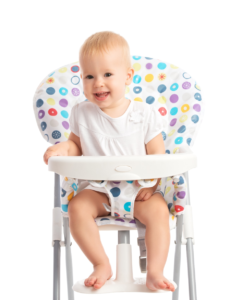
There is currently no mandatory standard for highchairs in Australia, so a little extra checking helps. Falls are the most common high chair injury, usually when a child tries to climb in or out.
- Look for a sturdy, stable chair with a wide base, and press down on the seat and backrest to check they don’t sag or move.
- If it folds, make sure the locks work so it won’t collapse.
- A five-point harness is installed and working, no fraying and the clip is secure. If missing you can purchase these separately.
Baby clothes, toys and books:
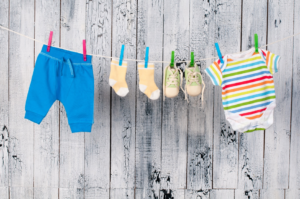
This is where second-hand really shines. Most baby clothes have not been worn for long because babies grow so quickly, so they are usually in great condition. Family and friends will often pass on their baby clothes, and I think this is the best form of recycling there is. With my own four children, many of the newborn outfits were worn by all of them and seeing each one wear them brought me so much joy bringing back memories each time!
Give clothes a good wash and dry before use, and check for loose buttons or decorations that could cause any hazard. For toys, check there are no broken pieces or small parts that could come loose and that any battery compartments are closed securely with a screw. Board books can be wiped over with a damp cloth.
Cleaning second-hand iteams:
A good clean helps any second-hand item feel like your own.
- Wash fabric covers, clothes and bedding according to the care label, and dry them well (a sunny day is ideal).
- Wipe hard surfaces with warm soapy water, following the manufacturers cleaning instructions where you have them.
- If you use disinfectant, rinse surfaces your baby may put in their mouth.
- Let everything dry completely before use to avoid mould.
Is it better to buy some new things?
There is no right or wrong answer here, and it will depend on your family, your budget and what is available to you. A helpful rule of thumb is that the more an item protects your baby while they sleep or travel, the more important its history becomes. When you don’t know where a car seat or mattress has come from, buying new can give you peace of mind. When it comes form someone you trust and passes the checks above, second-hand can be a safe and sensible choice.
Buying second-hand is a thoughtful choice for your family, your budget and the planet, and with a few careful checks you can feel confident about what you bring home. If you would like a little help getting organised , my free Enjoy Your Baby Bundle includes a baby equipment checklist you can take with you when you go shopping.
Remember, you know your family’s needs and budget best. Trust yourself to weigh up each item, and if something doesn’t feel quite right, it is always ok to walk away and keep looking. The right pram, cot or pile or tiny clothes is usually just around the corner.
Good luck looking for some second hand baby products!